

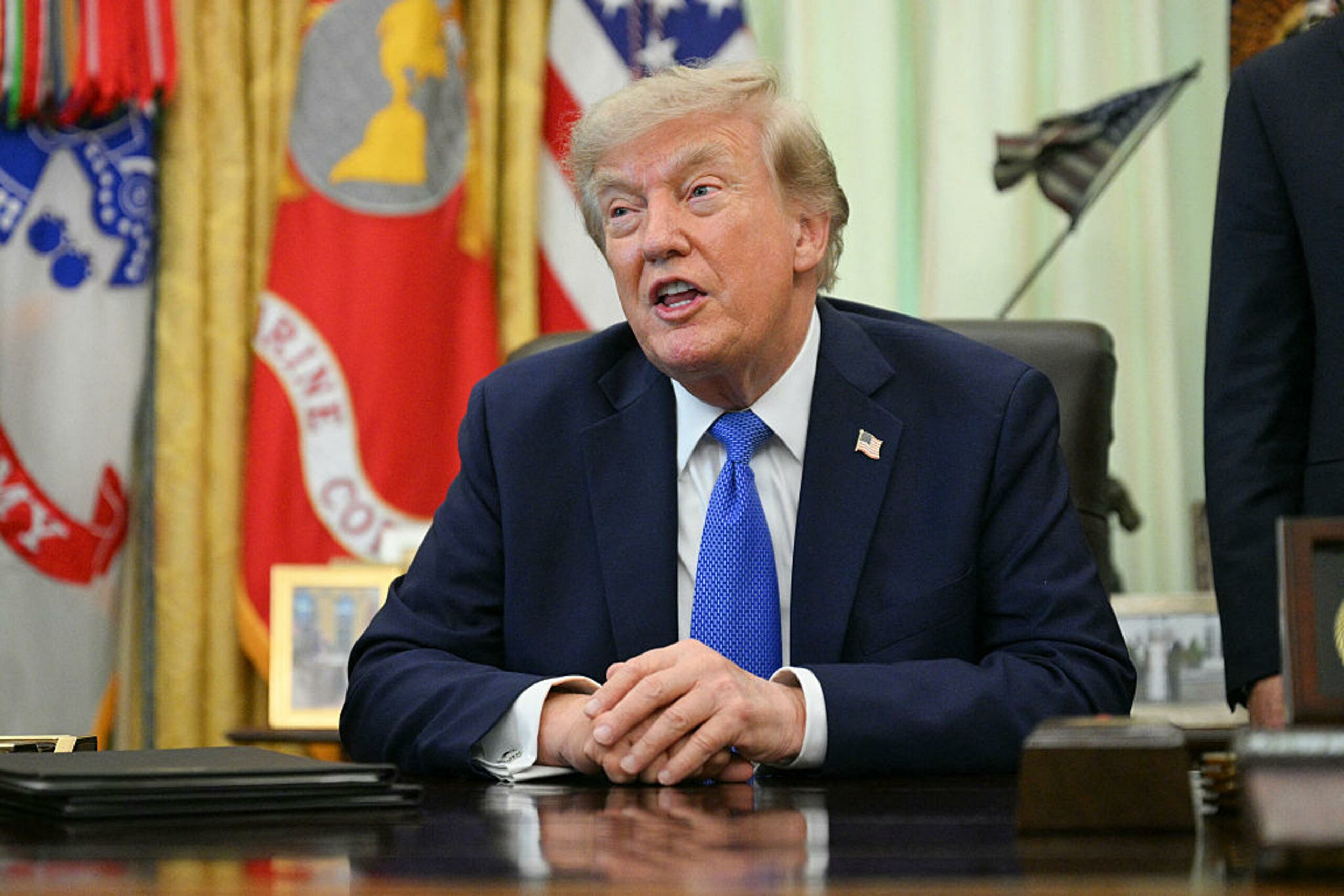
The U.S. President, Donald Trump has renewed his sharp criticism of the Federal Reserve, insisting that current interest rates are excessively high and calling on the central bank to slash borrowing costs immediately.
Trump argued that strong economic indicators should lead to lower interest rates rather than rate hikes, pushing back against the Fed’s cautious stance on sticky inflation.
Key Takeaways From Trump’s Statement
- Call for Rate Relief: President Trump publicly urged Fed Chair Kevin Warsh to lower rates, stating that high borrowing costs are unnecessarily penalizing businesses and consumers despite solid national economic output.
- Pushback Against Inflation Fears: Trump criticized the Fed’s traditional policy playbook, arguing that central bankers overreact to growth data by keeping monetary policy tight out of fear of inflation.
- Pressure on Fed Independence: The renewed demands mark another chapter in Trump’s ongoing friction with the central bank as markets evaluate how independent the Fed can remain under mounting political pressure.
Federal Reserve’s Position
Despite calls from the White House, the Federal Reserve maintained its benchmark interest rate in the range of 3.50% to 3.75% during its latest meeting.
While a minority of policymakers have pushed for hikes to tackle persistent price growth, Fed leadership continues to take a data-dependent approach ahead of its upcoming policy meeting.
What This Means for Global & Nigerian Markets
- Emerging Market Capital Flows: Lower U.S. interest rates typically weaken the U.S. Dollar (USD) index, making emerging market assets, including Nigerian sovereign bonds and domestic equities, more attractive to global portfolio investors.
- Borrowing Costs & Debt Servicing: A potential U.S. rate reduction could lower dollar-denominated borrowing costs globally, easing the foreign debt-servicing burden for developing nations like Nigeria.