
The U.S. Federal Bureau of Investigation (FBI) and Nigeria’s Economic and Financial Crimes Commission (EFCC) have partnered to initiate a joint investigation into the alleged diversion, budget inflation and mismanagement of funds distributed under United States Agency for International Development (USAID) programs.
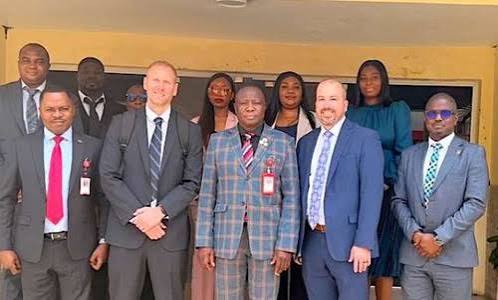
The collaboration follows a meeting in Lagos between an FBI delegation led by Assistant Law Enforcement Attaché Marcus Maccain and the EFCC’s Lagos Zonal Directorate leadership.
Focus of the Investigation
- Targeted Interventions: The probe focuses on donor-funded health initiatives, particularly programs targeting HIV/AIDS treatment and care, one-stop centers, and tuberculosis prevention.
- Post-Program Termination Audits: U.S. authorities are scrutinizing funds that remained with local implementing partner organizations following the cancellation or suspension of several USAID programs.
- Irregularities & Budget Inflation: Reviews by the U.S. Department of State’s Office of Inspector General (OIG) raised concerns over inflated project budgets and financial discrepancies across multiple states, including Kano State.
Key Operational Mandates
- Trace the Financial Trail: Acting on behalf of EFCC Chairman Ola Olukoyede, the commission pledged to trace the flow of capital to ultimate beneficiaries and determine whether allocated funds were deployed for their intended healthcare objectives.
- Long-Term Information Sharing: The FBI and EFCC agreed to establish a sustained framework for reciprocal intelligence sharing, access to banking records, and joint operational tracking.
- Nationwide Scope: The EFCC confirmed that its investigative team will cover all states across Nigeria where the affected partner organizations operated.
Implications for Donor-Funded Entities
The high-level joint probe signals heightened international oversight of non-governmental organizations (NGOs) and private implementing partners managing foreign aid funds in Sub-Saharan Africa. Entities found to have committed financial misconduct face potential asset freezes, global blacklisting, and prosecution across both U.S. and Nigerian legal jurisdictions.