

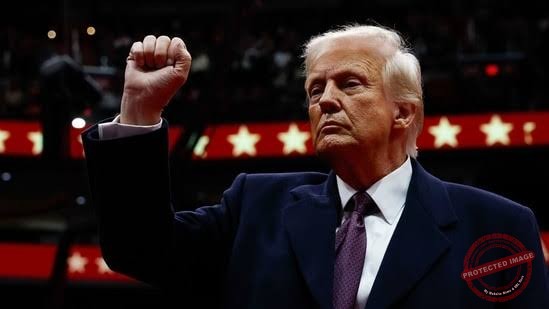
The 47th President of US, Donald Trump, has signed an Executive Order 14160, titled “Protecting the Meaning and Value of American Citizenship,” directing US government agencies to end birthright citizenship for certain children born in the United States. The order specifies that children born to mothers who are either unlawfully present in the U.S. or in the country on temporary visas will not be granted citizenship if the father is neither a U.S. citizen nor a lawful permanent resident. This policy is set to take effect for births occurring on or after February 19, 2025.
The executive order has faced immediate legal challenges. Eighteen state attorneys general filed a lawsuit in the United States District Court for the District of Massachusetts, arguing that the order violates the 14th Amendment of the Constitution, which has been interpreted to confer citizenship to anyone born on U.S. soil regardless of their parents’ immigration status. Similarly, immigrant and asylum-seeker rights groups filed a lawsuit in a Maryland federal court on behalf of five pregnant women, contending that the order unlawfully attempts to revise constitutional principles.
Federal judges have responded to these challenges by temporarily blocking the order. U.S. District Judge John C. Coughenour in Seattle called the move “blatantly unconstitutional,” while U.S. District Judge Deborah Boardman in Maryland issued a nationwide preliminary injunction, stating that the order is “likely to be found unconstitutional.” The Justice Department has appealed the Seattle ruling but has not yet appealed the Maryland decision.
Legal experts note that Trump’s actions, such as limiting birthright citizenship, withholding congressional funds, and removing independent agency heads, are unprecedented in their reach. The Supreme Court, with a conservative majority including three Trump appointees, has historically sided with his administration, but it’s uncertain if it will continue to support his expansive view of presidential authority. Lower courts have already blocked some of Trump’s actions, citing congressional authority and the Constitution. Some scholars foresee potential Supreme Court invalidation of Trump’s orders, particularly concerning birthright citizenship and the division of powers.
This development has significant implications for immigration policy and the interpretation of constitutional rights in the United States. The legal contention centers on the interpretation of the 14th Amendment, which grants citizenship to all individuals born or naturalized in the United States. The administration’s position challenges long-standing interpretations of this amendment, leading to a complex legal battle that is expected to reach the Supreme Court.